Snow Mushroom (Tremella) Explained: What It Does in a Moisturizer
Tremella mushroom, known in the US as snow mushroom, is a humectant: an ingredient whose job is holding water. Here is what that means in a moisturizer like the Hydrasnow Cream.
Tremella mushroom is a mushroom that has been used in Korean preparations for a very long time, and it is sold in the US under its common name, snow mushroom. In skincare it works as a humectant, which means its job is drawing and holding water. It is one of the two ingredients the Hydrasnow Cream is built around; the other is panthenol.
Snow mushroom has become a familiar name in US skincare in the last few years. This post covers what it actually does in a cream, without the mystique that tends to come with it.
Two names, one mushroom
You will see this ingredient called several things:
- Tremella or tremella mushroom, its common botanical name
- Snow mushroom, the name most US shoppers know it by
- Tremella fuciformis, the name used on ingredient lists
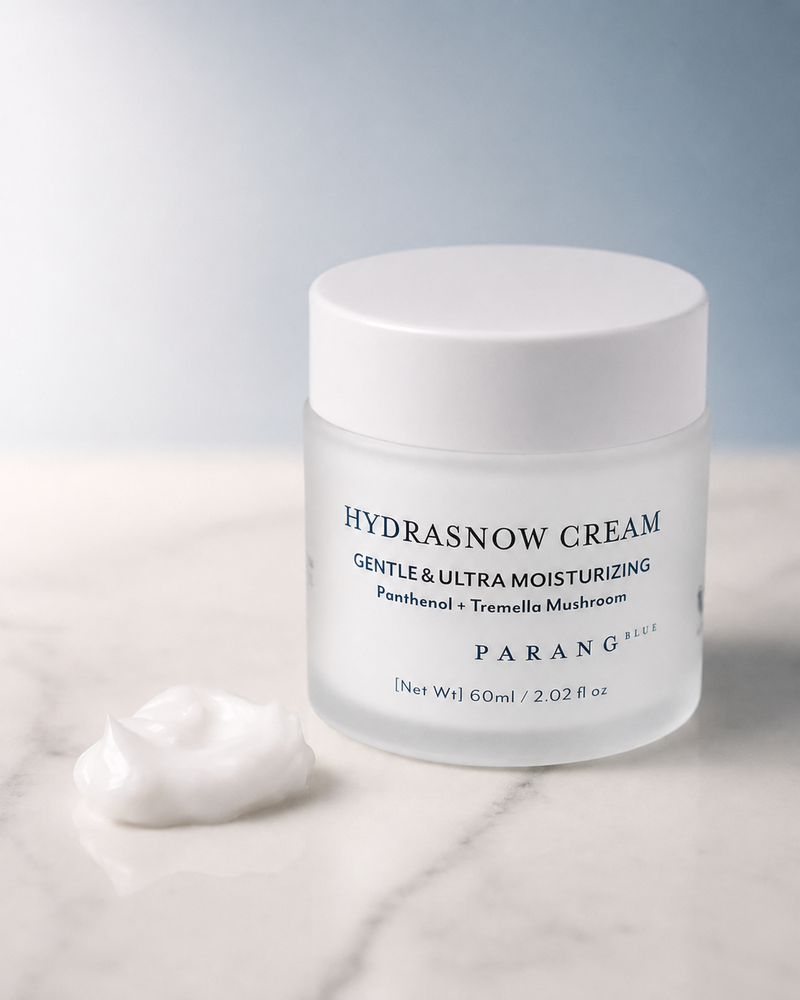
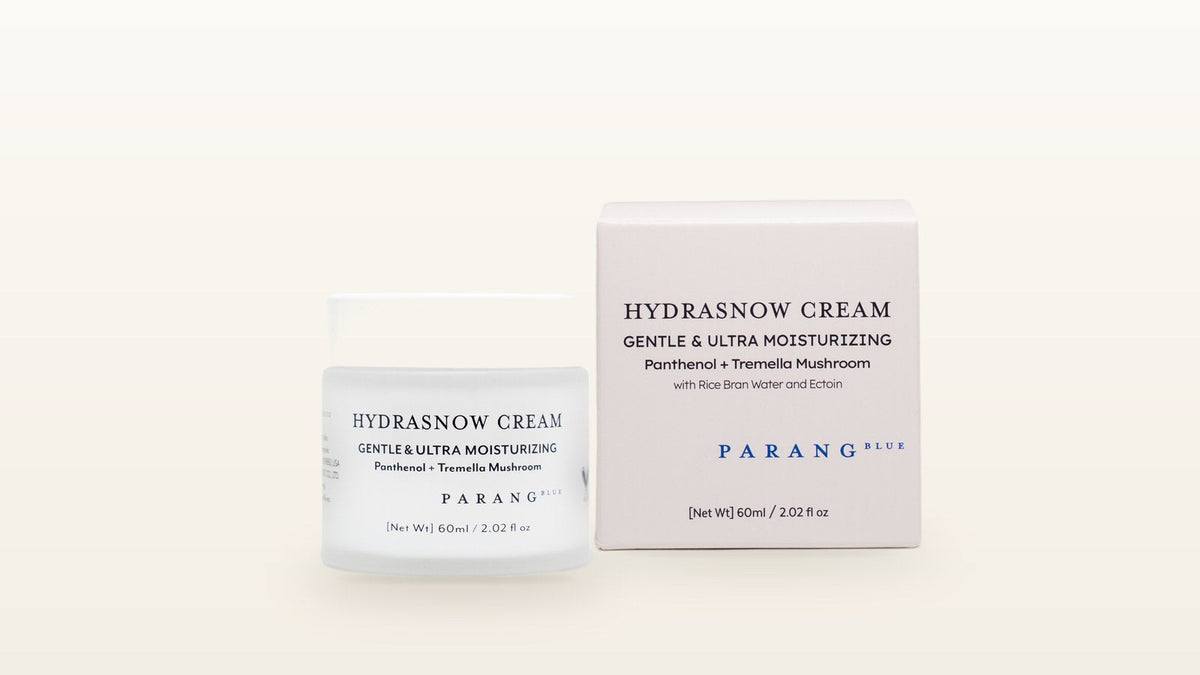
They all refer to the same mushroom. On the Hydrasnow Cream jar, it appears as "Tremella Mushroom," right next to panthenol.
Tremella is a pale, translucent mushroom with a soft, ruffled shape, which is where the "snow" in its common name comes from. It has a long history in Korean preparations, well before it showed up on skincare labels. Its move into moisturizers is more recent, and it follows a simple logic: the mushroom is known for how readily it takes up and holds water, and holding water is exactly what a moisturizer needs an ingredient to do.
What a humectant does
Moisturizer ingredients tend to do one of three jobs.
| Type | What it does | Examples in Parang Blue formulas |
|---|---|---|
| Humectant | Draws and holds water | Tremella (snow mushroom), panthenol |
| Soothing and conditioning | Helps skin feel calm and comfortable | Allantoin, aloe |
| Base | Carries everything else | Rice bran water, in the Hydrasnow Cream |
Tremella belongs firmly in the first row. A humectant's job is holding water in the formula and against the skin. That is less dramatic than most ingredient stories, and we think it is more useful to say it plainly. Where the honest answer is "it holds water," that is the answer.
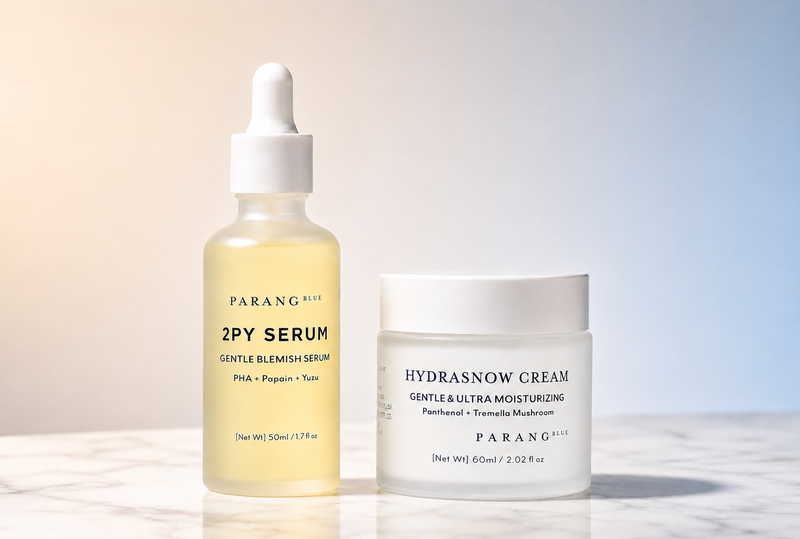
Humectants work best when there is water around for them to hold. That is one reason the Hydrasnow Cream goes on while the 2PY Serum underneath it is still slightly damp. We explained that sequence in The Two-Step Routine.
Why tremella, for reactive skin
The Hydrasnow Cream was made for skin that reacts. That shaped the choice of ingredients in a particular way: every line on the label had to earn its place, and nothing could be there just to add character.
Tremella fits that brief. It is not a fragrance, it is not there for texture alone, and it does not need a long list of companions to make sense in a formula. It does one clear job, holding water, and it lets the cream carry real moisture without leaning on heavy textures, added fragrance or a long list of botanical extracts.
It also pairs naturally with panthenol, the other ingredient the cream is built around. Panthenol is pro-vitamin B5 and one of the most common hydrating ingredients in formulas for easily irritated skin. Between them, the two cover the cream's main job. We went through the full formula in Meet the Hydrasnow Cream.
What else is in the Hydrasnow Cream
Tremella has company, though not much of it.
- Panthenol, pro-vitamin B5, the other half of the cream's foundation
- Rice bran water, used in place of plain water as the base
- Allantoin and aloe, the soothing group
- Ectoin and licorice root, in smaller supporting amounts
Ectoin is worth a word because people often ask about it. It is a well-regarded hydrating ingredient, and it is costly, which is why it appears in this cream as a supporting player rather than a headline. The cream is a tremella and panthenol formula, with ectoin.
Not in the jar: added fragrance, parabens, silicones, mineral oils, dyes and PEG.
How a snow mushroom cream should feel
Because tremella is a water-holding ingredient rather than a heavy one, a cream built around it can feel light and still carry real moisture. The Hydrasnow Cream is silky rather than heavy. It melts on contact, absorbs in under a minute and dries to a satin finish with no tackiness, so sunscreen or makeup goes on over it without rolling.
On a very dry day, two thin layers work better than one thick one.
A few signs that a moisturizer is carrying enough water for your skin, whatever brand it is:
- Your skin still feels comfortable a few hours after you apply it, not tight by lunchtime
- Makeup or sunscreen sits evenly on top rather than catching on dry patches
- You do not feel the need to reapply halfway through the day
If your face feels tight soon after moisturizing, the answer is not always a heavier cream. Often it is applying the moisturizer over slightly damp skin, or adding a thin second layer, so the humectants have water to hold. That is the reason the Hydrasnow Cream goes on while the serum beneath it is still damp.
Quick answers
Is snow mushroom the same as tremella?
Yes. Snow mushroom is the common US name for tremella. Ingredient lists usually call it tremella fuciformis, and the Hydrasnow Cream label calls it tremella mushroom.
What does tremella do in skincare?
In skincare, tremella works as a humectant, meaning its job is drawing and holding water in the formula and against the skin. It is one of the two ingredients the Hydrasnow Cream is built around, alongside panthenol.
Is the Hydrasnow Cream an ectoin cream?
No. Ectoin is in the formula in a smaller supporting amount. The cream is built around panthenol and tremella, and we describe it that way on purpose.
Try it
The Hydrasnow Cream is $19.95 for 60 ml. It scored 0.00 in a primary skin irritation patch test (Cert. HM-IR0084-75), a result on a test panel and not a prediction about your skin, so patch test on a small area first. For both steps, see The Two-Step Set.